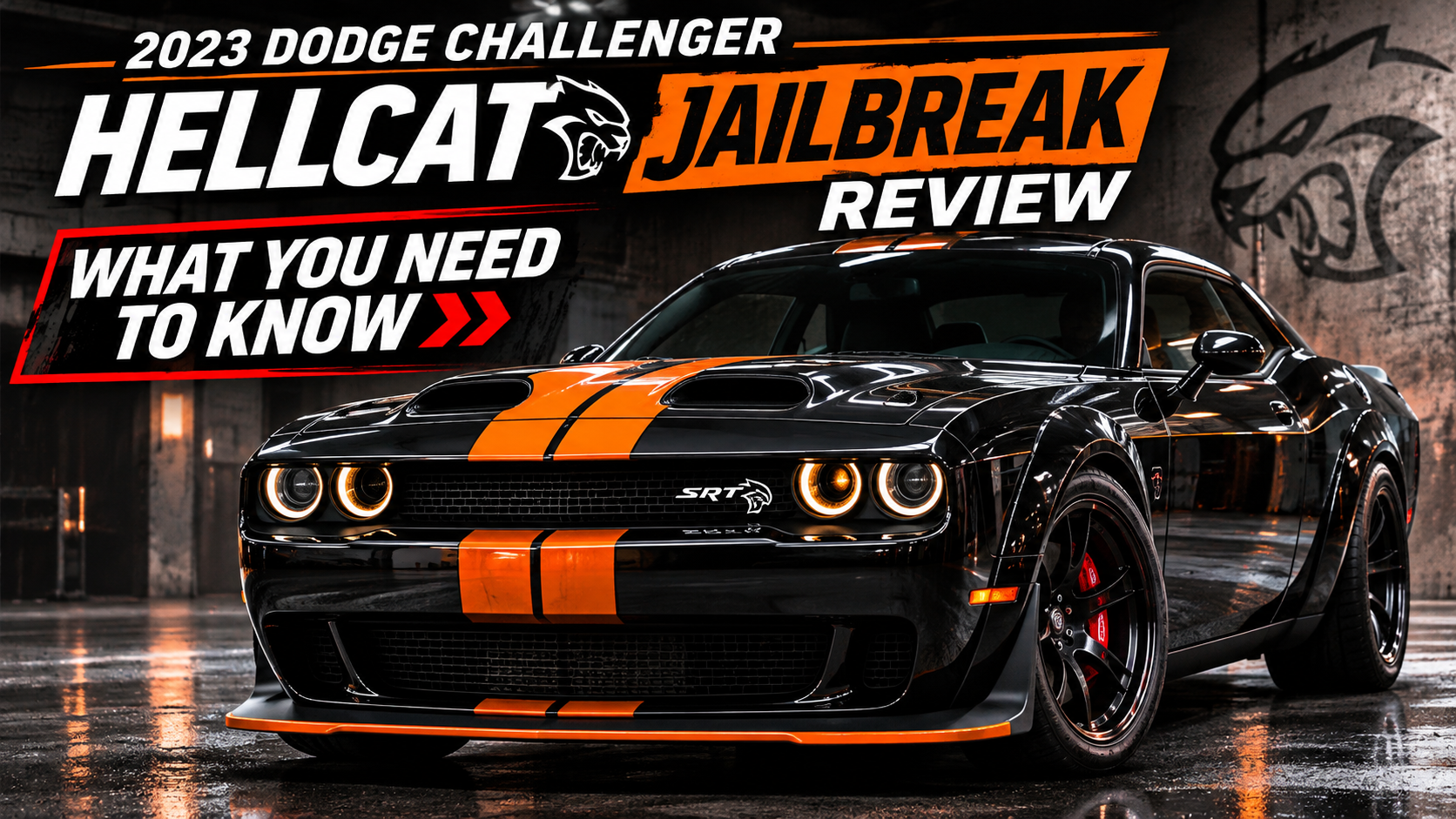
2023 Dodge Challenger Hellcat Jailbreak Review: What You Need to Know
The 2023 Dodge Challenger Hellcat Jailbreak is one of those cars that lives rent-free in the head of every Challenger enthusiast — and for good reason. We’ve been tracking impressions of this machine from across our community, and the consensus is unanimous: nothing quite prepares you for what the Jailbreak delivers. From the stunning widebody stance to the supercharged 6.2L V8 rumbling underneath that satin black hood, this car demands your full attention from the moment you drop into the driver’s seat.
What makes the Jailbreak trim especially interesting isn’t just the power — it’s the philosophy behind it. Think of it like jailbreaking a smartphone: it unlocks customization options that a standard Hellcat simply doesn’t offer. That concept alone sets this car apart in the Challenger lineup, and it’s what makes this particular variant so compelling to our members and the wider Challenger community.
In this 2023 Dodge Challenger Hellcat Jailbreak review, we’re breaking down every major aspect of the driving experience — from first impressions at the curb to white-knuckle highway pulls — so you know exactly what you’re getting into. Whether you’re actively shopping for one or just here for the ride, buckle up. This one’s worth every word.

The “Jailbreak” Name — What It Actually Means
Before we get into the drive, it’s worth understanding why Dodge chose the name “Jailbreak” for this trim. The concept is borrowed directly from the tech world: just like jailbreaking a phone unlocks features that were previously off-limits, the Jailbreak edition gives Hellcat owners access to customization options that the standard Hellcat doesn’t allow. We’re talking about adjustments to power output and performance settings that go well beyond what a base Hellcat puts in your hands.
That framing matters because it shapes how you approach the whole car. This isn’t just a trim level slapped on for marketing purposes — it’s a fundamentally more configurable machine. For the Challenger faithful who love digging into every setting and squeezing out every ounce of personality from their build, the Jailbreak name is a promise the car actually keeps.
First Impressions: The Spec and Exterior Styling
Visually, this particular Jailbreak configuration is a showstopper. A bold red exterior paired with a satin black hood is the kind of contrast that turns heads in any parking lot, and the widebody kit takes the aggressive stance to another level entirely. Our community has long held that the widebody treatment transforms the Challenger’s proportions, and seeing it on a Jailbreak in this spec really does confirm that opinion.
Details worth noting up close: there’s a Hellcat logo embedded directly inside the headlight housing, which is a subtle but genuinely cool touch. The yellow front lip guard pairs beautifully with the massive yellow Brembo brake calipers — a cohesive styling detail that makes the whole front end feel intentional rather than assembled. Those Brembos aren’t just for looks, either, as we’ll get to shortly. SRT badges front and rear round out the exterior, and the widebody arches give the whole car an unmistakably planted, purposeful look.
Under the Hood: The Supercharged 6.2L V8
Pop the hood and you’re greeted with one of the most visually impressive engine bays in the American muscle world. The 6.2L supercharged Hemi V8 is an absolute unit — the “SRT Supercharged” script sits prominently on both sides of the blower, and the sheer mass of the engine filling that bay is something you genuinely have to see in person. There’s a reason Hellcat owners love showing off their engine bays at meets and shows.
Beyond aesthetics, that engine produces 717 horsepower in standard Hellcat configuration — enough to make even experienced performance car drivers genuinely nervous. The supercharger whine is unmistakable, and as we’ll cover in the driving section, the sound coming from the engine bay actually competes with the exhaust note in a way that’s truly unique. If you’re thinking about modifications down the line — things like a cold air intake or a cat-back exhaust — just know that the factory setup on this car already sets an incredibly high bar. Always check local emissions and noise regulations before modifying, and be aware that mods can affect your factory warranty.
Interior: Alcantara, SRT Tech, and Real-World Comfort
Step inside and you’re reminded that this is a Dodge, not a Bentley — and honestly, that’s part of the charm. The interior isn’t dripping in exotic materials, but it’s well-equipped and purposeful. The flat-bottom Alcantara steering wheel is a genuine highlight: it feels great in your hands and the SRT badging on the wheel lights up red at night, which is exactly the kind of small detail that Challenger owners appreciate. The gear lever has that satisfying, substantial feel that fits the car’s personality perfectly.
Comfort features are more generous than you might expect from a car this focused on performance. Heated and cooled seats, a heated steering wheel, and the same comfort options for the passenger mean this car is genuinely daily-drivable in terms of creature comforts — fuel economy being the obvious asterisk. The leather seats with SRT stitching look and feel the part without tipping into unnecessary excess. If you want to protect that interior, floor liners are one of the first investments worth making on any Hellcat.
The SRT Performance Pages: A Kid in a Candy Store
Here’s where the Jailbreak truly earns its name. Hit the SRT button on the center console and you’re dropped into a performance menu that, frankly, has no real equivalent in any other American production car. The options are extensive enough that the screen genuinely takes a moment to load everything — live horsepower readings, live torque readings, a G-force meter, current gear indicator, a built-in dyno page, and adjustable launch control RPMs, among others. Our members who geek out on data logging and performance tracking will feel right at home here.
The power adjustment feature is the headline act. Through the custom mode, you can subtract or add up to 217 horsepower at the push of a button. To put that in perspective, 217 horsepower is the entire output of a lot of everyday performance cars. The ability to dial the car down to something more manageable — say, for a tight autocross course or just navigating traffic — and then open it back up when conditions allow is a genuinely useful tool, not just a gimmick. No ECU tuner required to access this level of flexibility; it’s baked right into the factory software. You can explore more of what the community has found with Challenger performance builds over at our Challenger Mods & Gear section.
Throttle Response and Off-the-Line Behavior
Getting the Hellcat Jailbreak moving from a stop requires a level of respect that goes beyond what most performance cars demand. The throttle response is immediate and ferocious — even modest inputs can break the rear tires loose before you’ve had a chance to think about it. For anyone coming from well-sorted European sports cars where traction management feels seamless, the Hellcat’s raw, analog character at low speeds is a genuine adjustment.
From a dig, managing all 717 horsepower is a real challenge without proper technique and the right tires. Upgrading to drag radials is something a lot of our members swear by for strip days, but even then, launch technique matters enormously. A practical tip worth noting: putting the car in the lower power mode — around 500 horsepower — for the initial launch, then switching up to full power once you’re rolling and hooked up, appears to be one of the more effective strategies for getting the best elapsed times from this platform without just spinning endlessly.
Traction Control, Sport Mode, and Managing the Power
The Hellcat Jailbreak’s drive modes deserve their own conversation. Switching into sport mode disables traction control — something clearly indicated in the RPM gauge — and unless you are very confident in your skills and have the right conditions, this is not something to take lightly. With traction control fully active, the car is already at the edge of what most drivers can confidently manage. Without it, the rear end will step out with very little provocation.
The takeaway here isn’t that the car is poorly engineered — it’s that 717 naturally ferocious horsepower in a rear-wheel-drive muscle car is a lot to manage, full stop. Using the paddle shifters in manual mode adds another dimension, though there is a noticeable lag when downshifting aggressively. The car rewards drivers who understand its tendencies and work with them rather than against them. Auto mode with traction control on is the sensible starting point for anyone getting acquainted with the car for the first time.
The Sound Experience: Engine Bay vs. Exhaust
This might be one of the most memorable sensory aspects of the Hellcat Jailbreak, and it’s hard to fully convey in text. The supercharger produces its own distinct, spine-tingling whine from the engine bay, and the exhaust note is its own beast entirely. What makes this car unique is that both sounds are loud enough and distinctive enough that they seem to compete with each other — you’re genuinely hearing two separate sound profiles fighting for dominance, and the combined result is unlike anything else on the road.
Even at idle, the engine vibrations communicate through the whole car in a way that feels purposeful rather than rough. It’s that old-school muscle car character expressed through modern engineering — something our community consistently points to as one of the core reasons the Challenger Hellcat has such enduring appeal. If the factory exhaust has you thinking about upgrades, a quality cat-back exhaust can amplify that already remarkable soundtrack further, though again, check your local noise ordinances first.
Suspension and Ride Quality
At around 4,400 pounds, the Challenger Hellcat Jailbreak is a substantial machine, and the suspension tuning leans decidedly toward sporty rather than plush. You’ll feel road imperfections, and this is not a car that floats down the highway in isolation. That said, “sporty” doesn’t mean punishing — it’s entirely livable for daily driving, and the feedback you get through the chassis is part of the experience rather than a flaw.
The setup feels appropriately firm for a car at this performance level. It communicates what the tires are doing, which matters when you’re managing this much power. Don’t go into a Hellcat expecting GT grand-touring comfort, but don’t expect a bone-rattling track car either — it sits comfortably between the two and does both reasonably well.
Steering Feel and Braking Performance
The steering on the Hellcat Jailbreak is one of the genuine surprises in this car. Given the Challenger’s reputation as a big, bruising muscle car, many people — ourselves included — tend to underestimate how sharp and responsive the steering actually is. It’s direct, it communicates well, and combined with the Alcantara flat-bottom wheel, it gives the driver real confidence through corners and lane changes.
The braking is equally impressive, and those massive yellow Brembo calipers aren’t just for show. Stopping confidence is genuinely strong in this car — the brakes feel capable of hauling the Hellcat down from high speeds repeatedly without drama. For a nearly 4,400-pound vehicle producing 717 horsepower, that braking performance is a critical piece of the safety equation. A front splitter can further enhance high-speed stability and is worth exploring for members who push this car on track days.
High-Speed Behavior and Highway Performance
Where the Hellcat Jailbreak truly distinguishes itself from other powerful cars is that the drama never really goes away, even at highway speeds. Most high-performance cars eventually feel settled and predictable once you’ve spent time with them — the power becomes accessible and the scary edge fades. The Hellcat doesn’t do that. Flooring the throttle at 70 or 80 mph still produces a genuinely unnerving surge that demands full concentration and respect.
This isn’t a critique — it’s what makes the Hellcat experience so singular. Other well-engineered performance cars will hook up confidently and put the power down cleanly every time. The Hellcat keeps you honest. The rear end moves, the power builds ferociously, and the whole experience stays visceral and exciting in a way that more clinical performance cars never manage. It demands that you stay engaged, and most Challenger drivers wouldn’t have it any other way.
The Size and Learning Curve
Make no mistake — the Challenger Hellcat Jailbreak is a large car, and that size takes some adjustment, especially in the widebody configuration. Parking lots, tight turns, and close-quarters maneuvering require extra awareness, and the turning radius is what you’d expect from a car with this footprint — generous, but not nimble. First-time Hellcat drivers should expect an adjustment period before the car’s dimensions feel truly intuitive.
That said, the sheer presence of the widebody Challenger is part of the appeal. Once you’re comfortable with the size, that massive stance and broad body feel purposeful and planted rather than unwieldy. It’s a car that rewards the time you put into understanding it.
The Used Market Case: Are Older Hellcats Worth It?
For members who aren’t in a position to drop on a newer Jailbreak, the used Hellcat market is worth serious consideration. Earlier narrowbody Hellcat examples from the 2015–2016 model years can be found around the $45,000 mark, which represents extraordinary value for 707 horsepower. A word of caution though: these are among the most heavily driven and abused performance cars in the used market. Thorough pre-purchase inspections are non-negotiable, and a compression test and full service history review should be on every buyer’s checklist.
On the reliability question, the Hellcat platform has a strong track record — high-mileage examples are out there and not difficult to find, which speaks to the durability of the drivetrain when it’s been reasonably maintained. Owner reports consistently back this up. The 2023 Jailbreak in excellent condition sits in the $75,000–$80,000 range, while solid used examples of the broader Hellcat family can be had for considerably less. Check out our Challenger Deals & Perks page for community-sourced finds and member tips on navigating the market.
Tips and Best Practices for Hellcat Jailbreak Owners
Based on everything covered in this review and what we’ve seen work across the Challenger community, here are the key takeaways worth keeping in mind with this car. First, respect the throttle — especially at low speeds and from a stop. The Hellcat Jailbreak will punish careless inputs faster than almost any other street car on the market. Second, use the power adjustment feature strategically: dialing down to around 500 horsepower for launches, then opening up to full power at speed, is one of the most effective techniques for managing the car’s output without just spinning the tires endlessly.
Third, keep traction control on until you truly understand the car’s behavior — and even then, make sure you’re on a closed course or an appropriate venue before disabling it. Fourth, if you’re shopping used, prioritize a full pre-purchase inspection and be especially vigilant with the 2015–2016 generation, which is the most likely to have been abused. Fifth, the interior is already well-equipped from the factory, but practical additions like floor liners protect your investment. For exterior care, a quality ceramic coating and a foam cannon setup will keep that finish looking showroom-fresh between meets. And if you want to rep the lifestyle, our Challenger merch collection has you covered. Always confirm any specifications or service intervals against the factory service manual for your specific model year.
Frequently Asked Questions
What makes the 2023 Dodge Challenger Hellcat Jailbreak different from a standard Hellcat?
The Jailbreak trim unlocks customization options that the standard Hellcat doesn’t offer — most notably the ability to adjust power output by up to 217 horsepower up or down through the SRT performance pages. Think of it as a factory-unlocked version of the Hellcat that puts significantly more control in the driver’s hands without requiring aftermarket modifications.
Is the Hellcat Jailbreak practical as a daily driver?
In terms of comfort features — heated and cooled seats, heated steering wheel, a capable infotainment system — yes, it’s genuinely daily-drivable. Fuel economy is the obvious trade-off with a 717-horsepower supercharged V8, and the car’s size and throttle sensitivity require ongoing attentiveness in traffic. But it’s far from a one-trick track car; many owners run them daily without issue.
How reliable is the Hellcat platform long-term?
The Hellcat drivetrain has a strong reliability reputation, supported by the number of high-mileage examples that exist in the real world. That said, these cars attract spirited drivers, so used examples should always be inspected thoroughly. Proper maintenance and not consistently running the car at its absolute limits go a long way toward longevity. Check owner reports and look for a documented service history when shopping used.
What’s the best way to launch a Hellcat Jailbreak without excessive wheel spin?
The community-tested approach is to use the power reduction mode — dropping output to around 500 horsepower — for the initial launch, then ramping up to full power once the car is hooked up and rolling. Proper launch control RPM settings through the SRT pages also help. For serious track use, drag radials make a significant difference in putting power down cleanly. Always use a proper facility for performance launches.
Conclusion: The Hellcat Jailbreak Is Something Special
The 2023 Dodge Challenger Hellcat Jailbreak review really comes down to this: it’s a car that genuinely surprises you, even if you think you know what to expect. The raw, analog drama of the driving experience, the depth of customization through the SRT performance pages, the supercharger soundtrack, the sharp steering, and the confidence-inspiring Brembo brakes all combine into something that no other American car — and arguably very few cars at any price point — can replicate. It’s not perfect; the size takes adjustment, the fuel bills are real, and the throttle will humble you if you’re not paying attention. But those quirks are inseparable from what makes the Hellcat Jailbreak so utterly compelling.
For more community-driven coverage of Challenger builds, specs, and owner experiences, browse the full Challenger Videos archive and check in with the Challenger Blog for the latest from the community. If you’ve got a Hellcat or Jailbreak build of your own, we’d love to see it.
Some links in this post are affiliate links, which means the club may earn a small commission at no extra cost to you. Read our affiliate disclosure.
Want more Challenger mods, owner builds and deals? Join the club free for our weekly newsletter and monthly giveaways (official rules).
Talk Challengers with fellow owners in our Facebook group, and got a build to show off? Submit your Challenger to the Member Garage.